
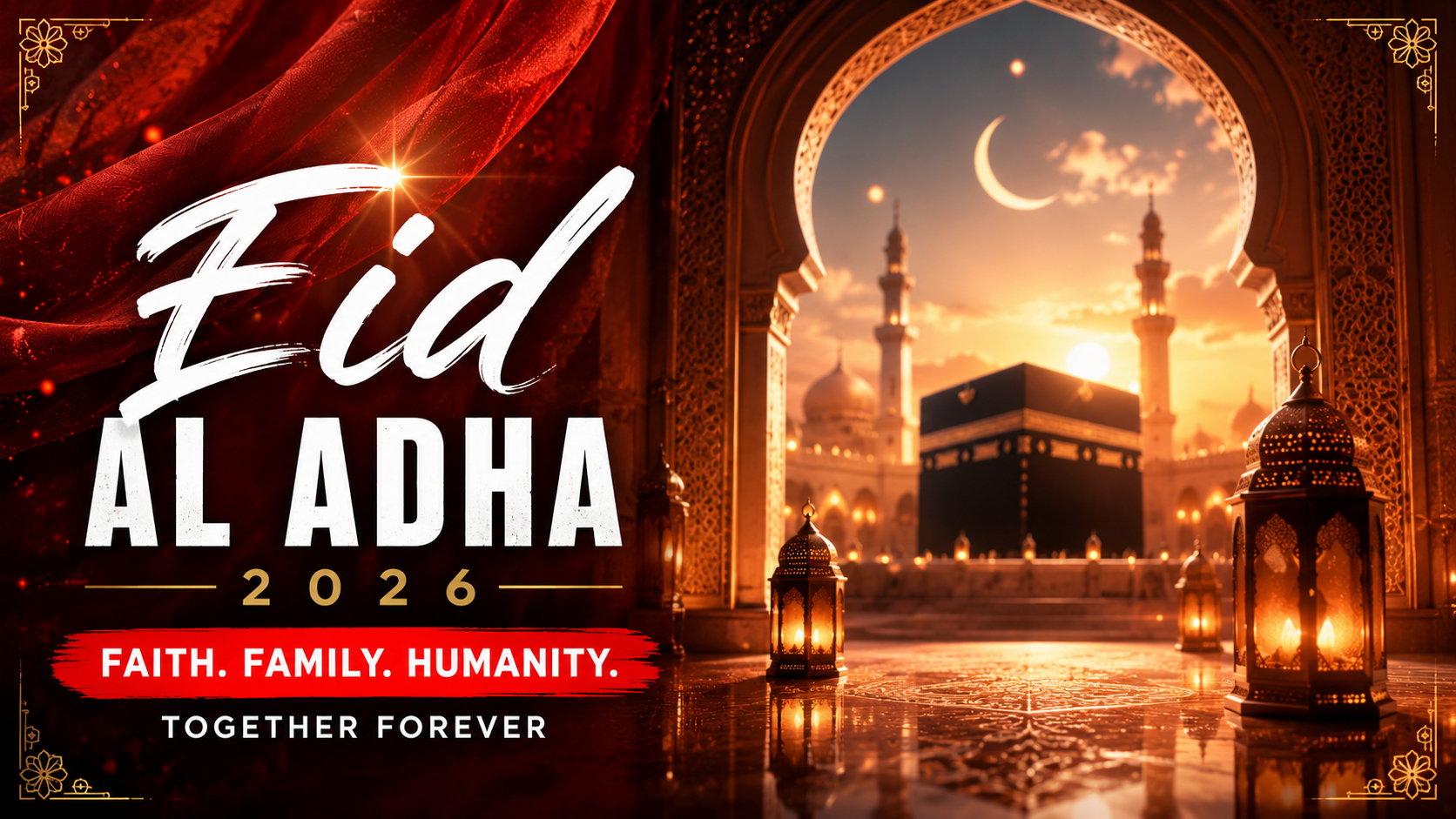
Eid al Adha 2026 is not just another Islamic celebration. It is a powerful reminder of sacrifice, obedience, gratitude, unity, and humanity in a world desperately searching for peace and meaning. As millions prepare to honor this sacred occasion, the deeper message behind Eid al Adha becomes more important than ever before.
In 2026, the world will witness one of the most emotional and spiritually uplifting moments in the Islamic calendar. Families will gather. Prayers will echo through cities and villages. Hearts will soften. Communities will reconnect. And millions of believers will reflect on one timeless truth: true faith demands sincerity, sacrifice, and compassion.
Known as the Festival of Sacrifice, Eid al Adha commemorates the unwavering devotion of Prophet Ibrahim, who was willing to sacrifice what he loved most in obedience to Allah’s command. Before the sacrifice took place, Allah replaced his son with a ram, symbolizing mercy, faith, and divine wisdom. This historic moment continues to inspire generations of Muslims worldwide.
Today, the meaning of Eid al Adha goes far beyond tradition. In an age dominated by stress, division, and material obsession, this holy festival reminds humanity about values that truly matter. Sacrifice is not only about animals. It is about ego, pride, selfishness, greed, hatred, and neglect. Eid al Adha teaches believers to become better human beings for their families, communities, and society.
As Eid al Adha 2026 approaches, preparations are already building excitement across homes, businesses, charities, and religious organizations. Markets become vibrant. Families shop for new clothes. Children eagerly await celebrations. Mosques prepare for special prayers. Communities organize food distributions. The atmosphere transforms into a beautiful expression of faith and togetherness.
One of the most meaningful aspects of Eid al Adha is Qurbani, the act of sacrifice performed by eligible Muslims. The meat is distributed among family members, relatives, neighbors, and especially those in need. This act strengthens social bonds and ensures that even struggling families can experience joy during the celebration. In many regions facing poverty and hardship, Eid donations and Qurbani distributions become a lifeline for thousands.
The emotional impact of Eid al Adha cannot be ignored. It reconnects families separated by distance. It heals broken relationships. It inspires forgiveness. It encourages generosity at a time when the world needs compassion more than ever. While technology continues to dominate human interaction, Eid reminds people about the irreplaceable power of real human connection.
For many Muslims, Eid al Adha 2026 will also carry deep spiritual importance because it aligns closely with the sacred pilgrimage of Hajj. Millions of pilgrims traveling to Masjid al-Haram in Mecca will perform one of the greatest acts of worship in Islam. Watching believers dressed equally in white garments serves as a breathtaking reminder that wealth, status, race, and nationality mean nothing before Allah. Humanity stands equal in faith.
The global significance of Eid al Adha continues to grow every year. From Asia to Europe, from Africa to North America, Muslims celebrate this sacred occasion with cultural beauty while preserving the core Islamic values of humility and devotion. Social media platforms, digital campaigns, and online charity initiatives have also transformed how communities engage with Eid. In 2026, digital connectivity is expected to make Eid celebrations more visible, interactive, and globally connected than ever before.
Businesses and brands are also recognizing the emotional and economic importance of Eid al Adha. Fashion industries launch festive collections. Food businesses prepare seasonal offerings. Travel companies promote holiday experiences. Online stores introduce Eid promotions. However, the real spirit of Eid remains rooted in gratitude, kindness, and faith rather than commercialism.
Parents play a crucial role during Eid al Adha by teaching children the meaning behind sacrifice and generosity. The younger generation must understand that Eid is not only about food, gifts, or celebrations. It is about becoming compassionate individuals who care for others and remain thankful for every blessing. These lessons shape stronger families and healthier societies.
In many communities, Eid al Adha also becomes a time of healing and charity. Volunteers distribute meals to homeless individuals. Organizations arrange donation drives for struggling families. Mosques host community gatherings to support vulnerable people. These acts demonstrate the true beauty of Islam through action rather than words.
As the world moves deeper into uncertainty, economic challenges, and emotional isolation, the message of Eid al Adha becomes more urgent and relevant. Humanity is craving purpose, empathy, and hope. This sacred celebration reminds people that sacrifice leads to growth, patience leads to reward, and faith leads to peace.
The beauty of Eid al Adha 2026 lies in its ability to unite hearts beyond borders. Regardless of language, nationality, or culture, millions will stand together in prayer, gratitude, and celebration. It is one of the rare moments where humanity collectively pauses to reflect on values that truly matter.
For content creators, brands, organizations, and publishers, Eid al Adha 2026 presents a major opportunity to share meaningful stories, inspirational campaigns, and community-driven initiatives. Audiences are increasingly searching for authentic, emotional, and value-driven content. Articles that educate, inspire, and emotionally connect with readers are expected to dominate online engagement during the Eid season.
This Eid is more than a festival. It is a spiritual awakening. It is a reminder that sacrifice creates strength, faith creates resilience, and kindness creates lasting impact. In a fast-moving world obsessed with temporary success, Eid al Adha brings humanity back to timeless principles that never lose value.
As families prepare for Eid al Adha 2026, the real question is not what people will wear or eat. The real question is what values they will carry forward after the celebration ends. Because the true success of Eid is measured not by appearances, but by transformed hearts, stronger faith, and acts of compassion that continue long after the prayers are over.